Skip to content
Música para DisfrutarMusic publisher
English
  • Español
  • English
  • DeutschIn preparation
  • FrançaisIn preparation
  • 日本語In preparation

Frédéric Chopin

Nocturne Op. 9 No. 2

Score and Study Guide

The complete original score, edited and fingered by David de Miguel. Explore the harmony, shape the melody, and bring the voices into balance through analysis and studies at the piano.

Seven ways to study the nocturne

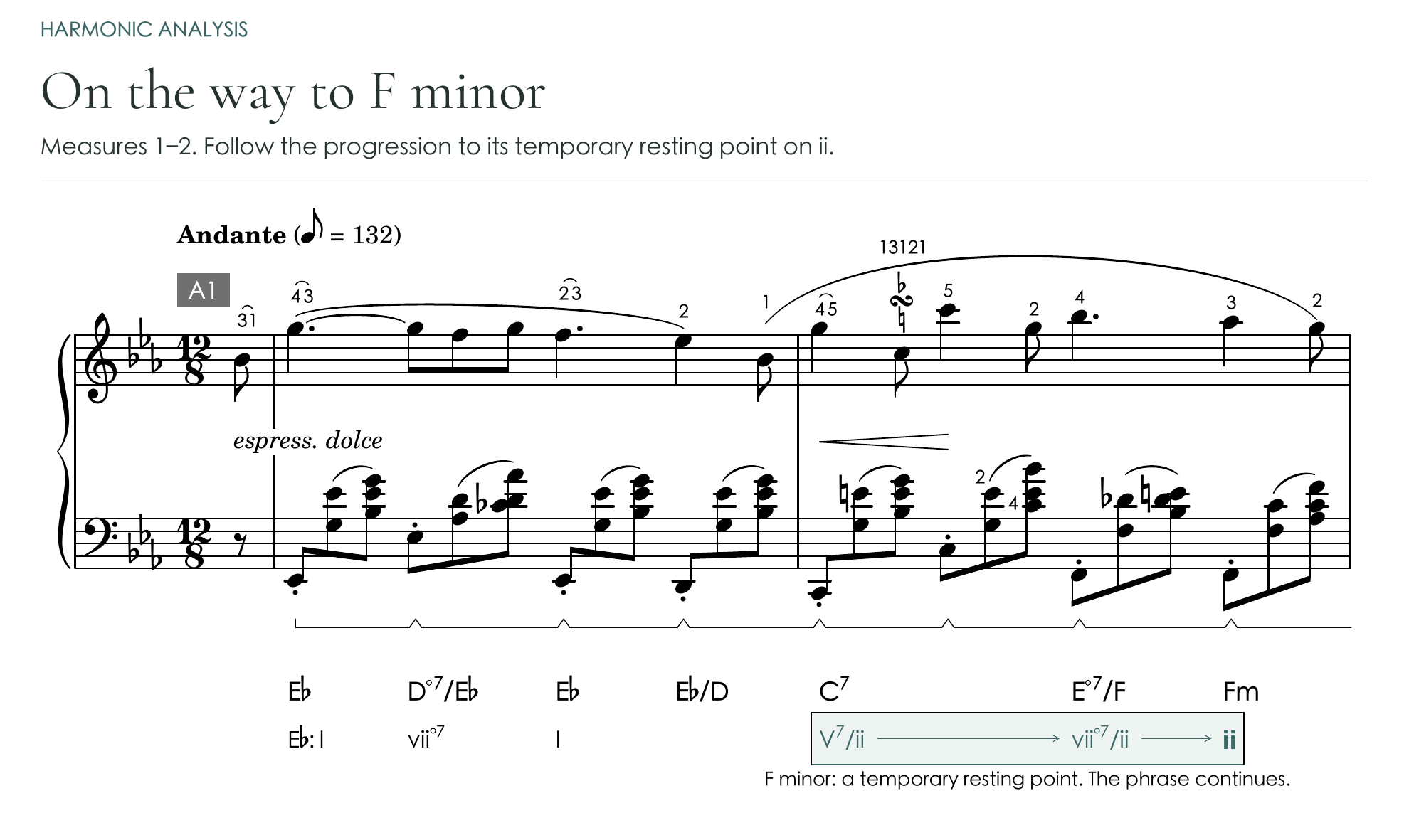
Harmonic analysis of the nocturne

Pickup and measures 1–2, with the progression to F minor highlighted in green.
Chord symbols
These name the chords you play. Here, C7 means a C major triad with a minor seventh.
Roman numerals
These show how the chords relate and where tension resolves. In E-flat major, C7 functions as V⁷/ii, the dominant of ii. It leads to a brief point of repose on F minor.

The essential melody

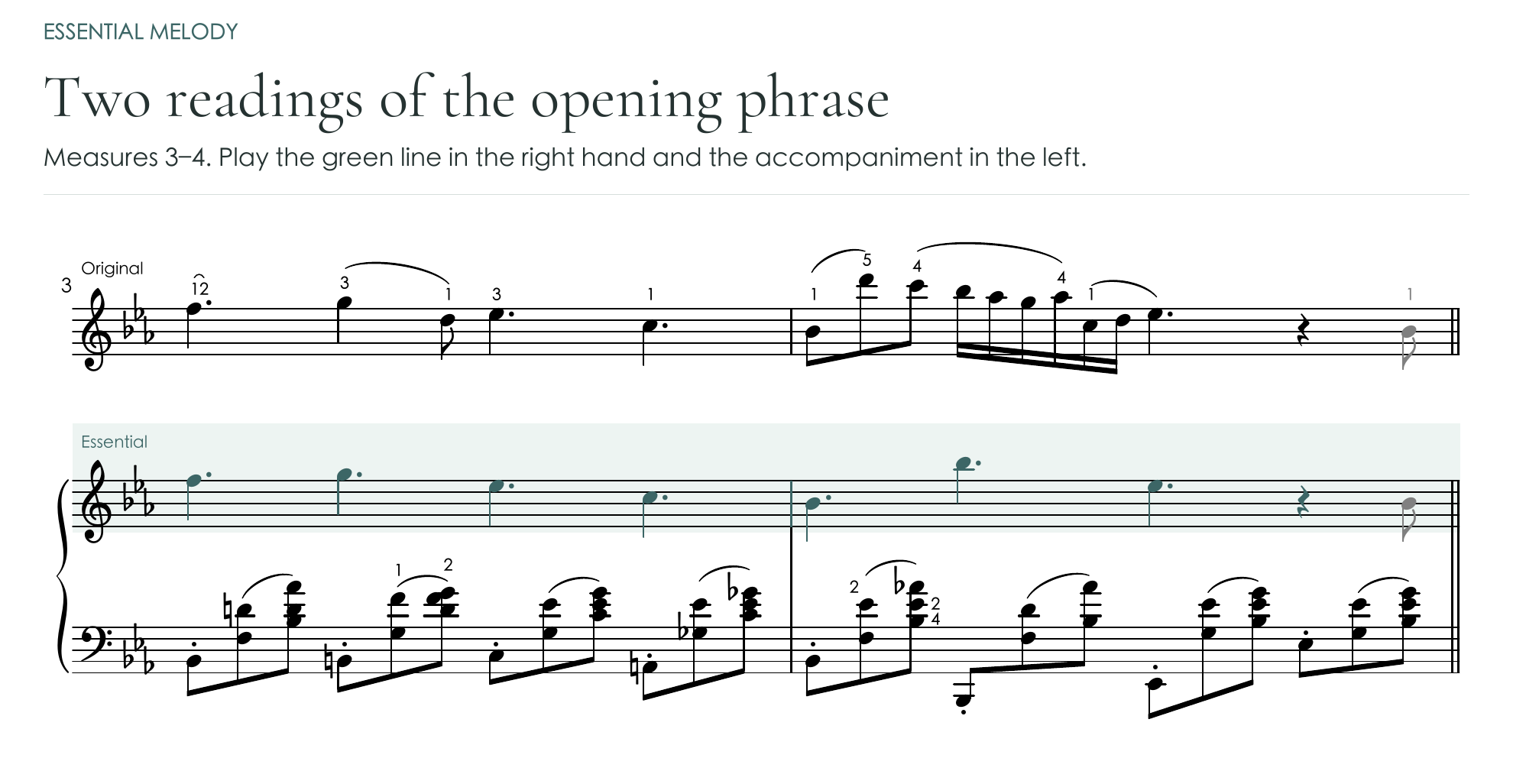
The reduction brings out the notes that give the phrase its shape. Play them without the ornaments, then listen for the same melodic arc when you return to Chopin’s score.

Measures 3–4 of the original phrase above its essential melodic line, marked in green.

Melody and bass

Play the original melody in measures 1 and 2 with just the bass line. Listen to how the bass shapes the phrase when you leave out the inner chords.

Measures 1 and 2 of the nocturne. The original melody is shown in green and the bass line in ochre, with the inner chords omitted.

Phrasing the chords with the right hand

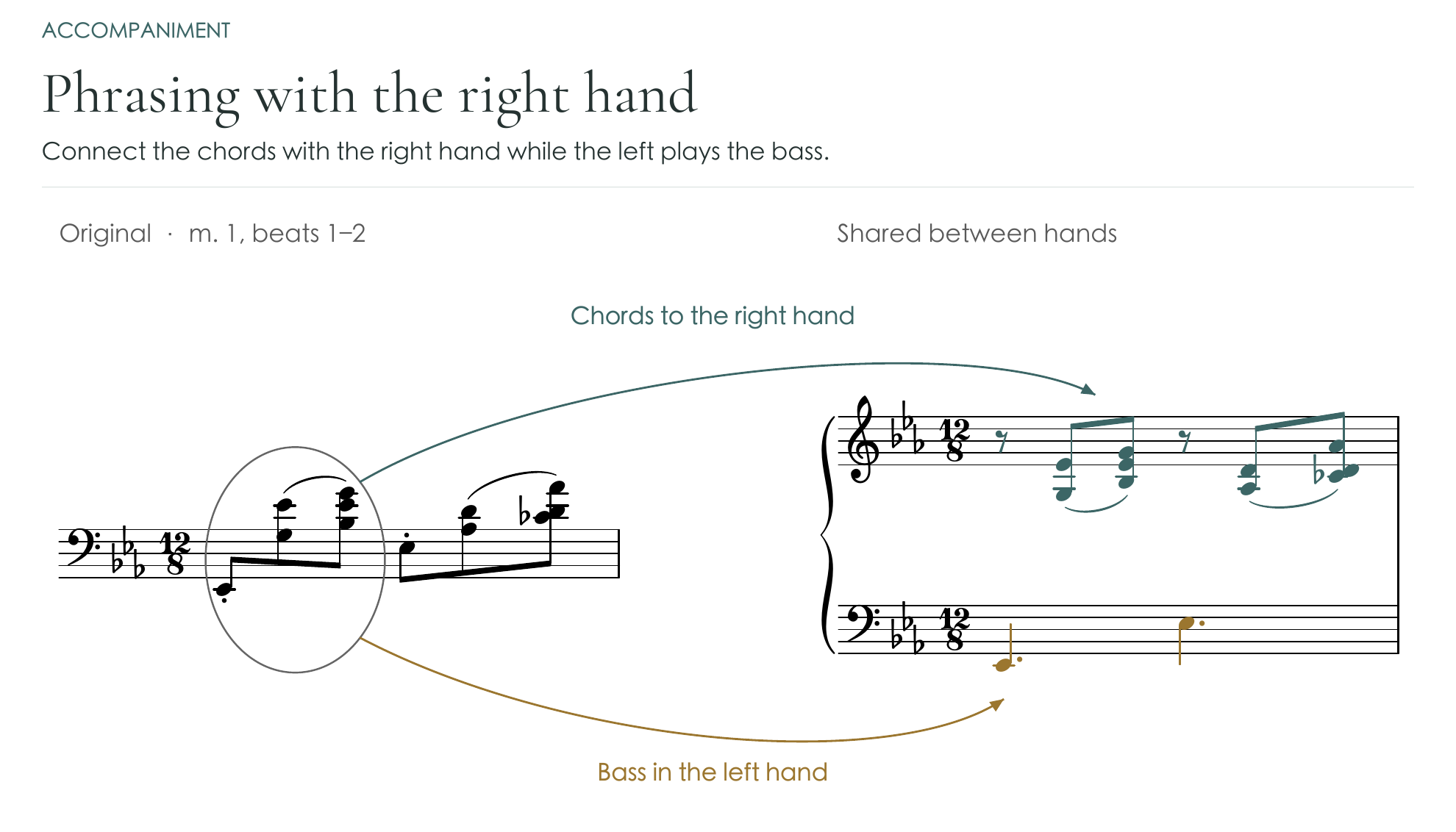
Keep the bass in your left hand and move the chords to your right. Listen to their upper notes as a melody and connect one chord to the next. Then bring that same phrasing back to the left hand.

Arrows show the chords moving to the right hand in green while the bass stays in the left in ochre.

Quadruplet and octuplet

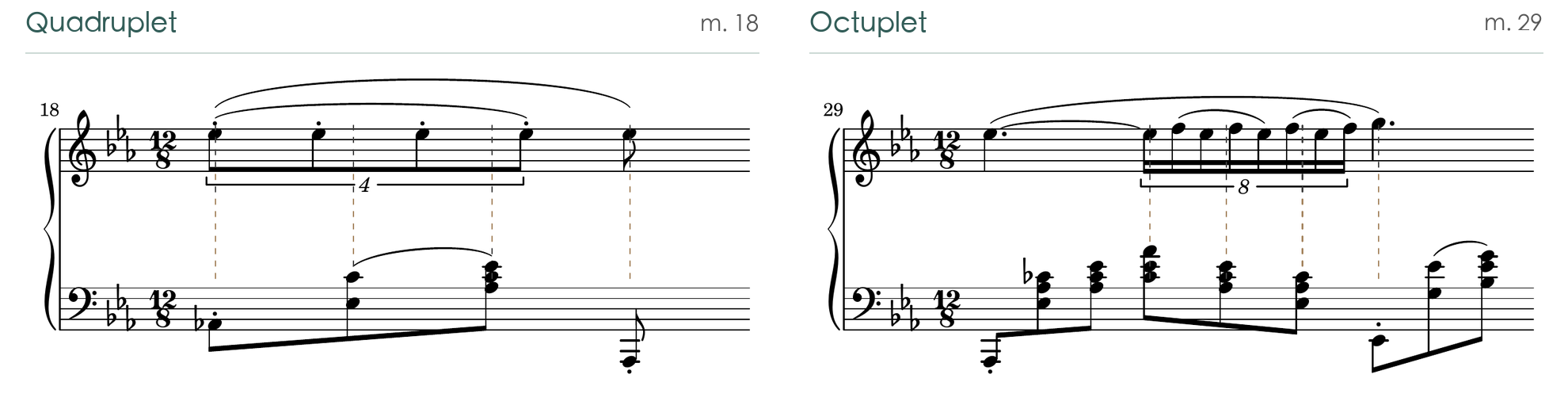
In measure 18, four right-hand notes fit into the time of three left-hand eighth notes. In measure 29, eight sixteenth notes span those same three eighth notes. The guides show where the left hand enters without adding accents to the right-hand line.

The quadruplet in measure 18 and the octuplet in measure 29. Ochre guides align the three left-hand eighth notes with the right hand.

The turn in measure 2

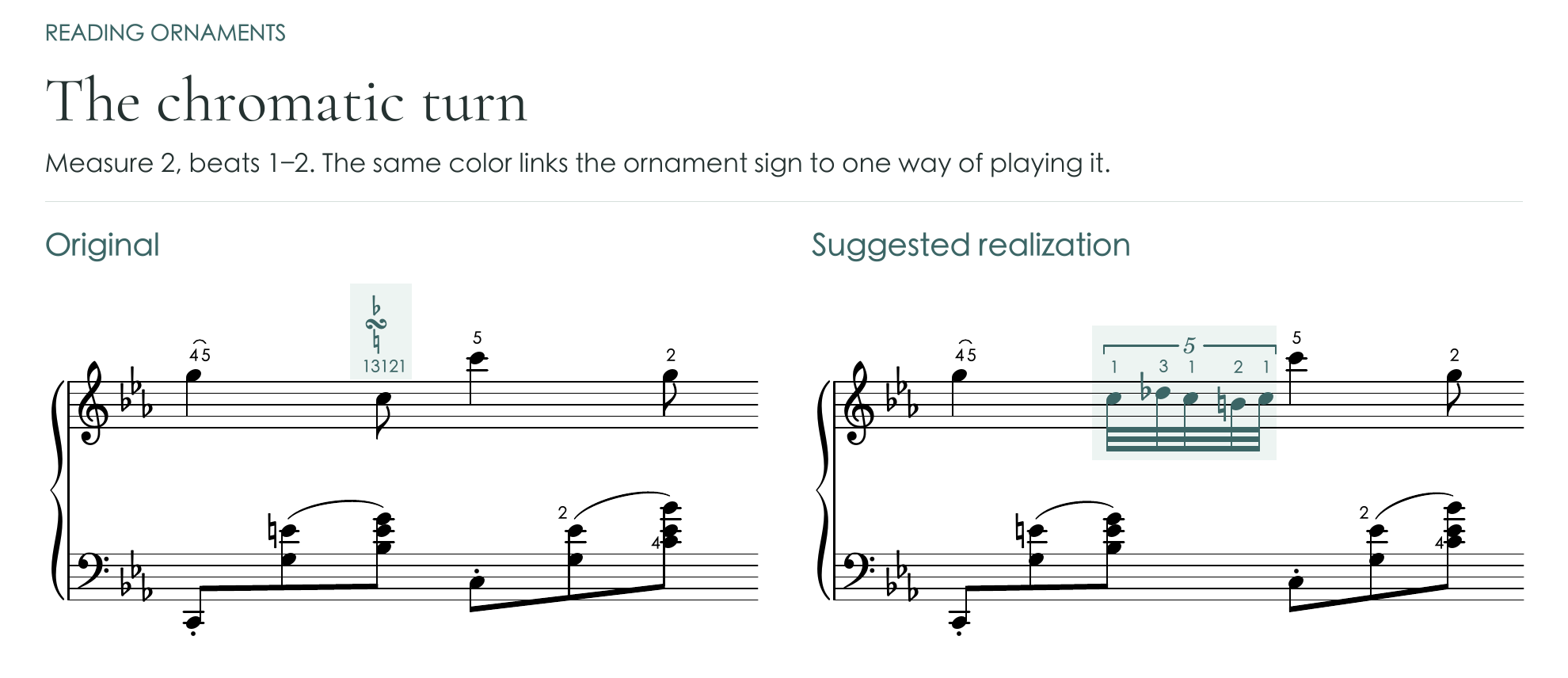
The example pairs Chopin’s turn sign with one way to play it. The book also gives trills and mordents written out note for note, so you can hear how each ornament leads into the melody.

The turn sign and the five notes of its suggested realization, linked by color.

Technical studies for the cadenza

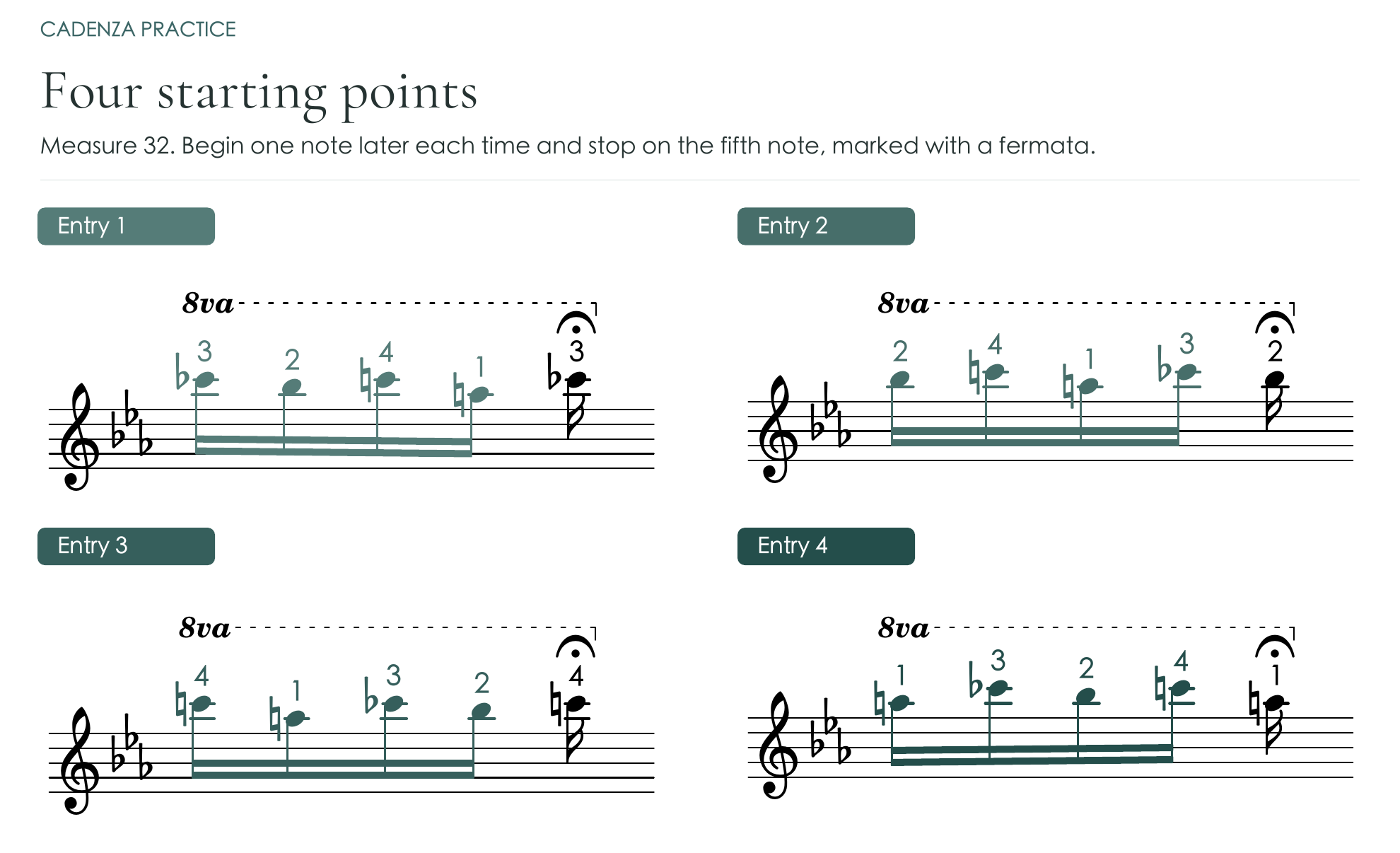
Practice the repeated figure in measure 32 from four different starting points. Begin with four notes and a landing note, then extend the group. Rhythmic variations prepare the transition from the repeated figure to the final descent.

Four starting points in the cadenza, in shades of green. The note with the fermata remains in black.
David de Miguel

About the author

David de Miguel

This guide grew out of the work I do at the piano with my students.

I’ve brought together the ways of practicing I return to in lessons. Listening closely to a single voice, chord, or gesture can change what you hear and how you choose to play the phrase.

Meet the author
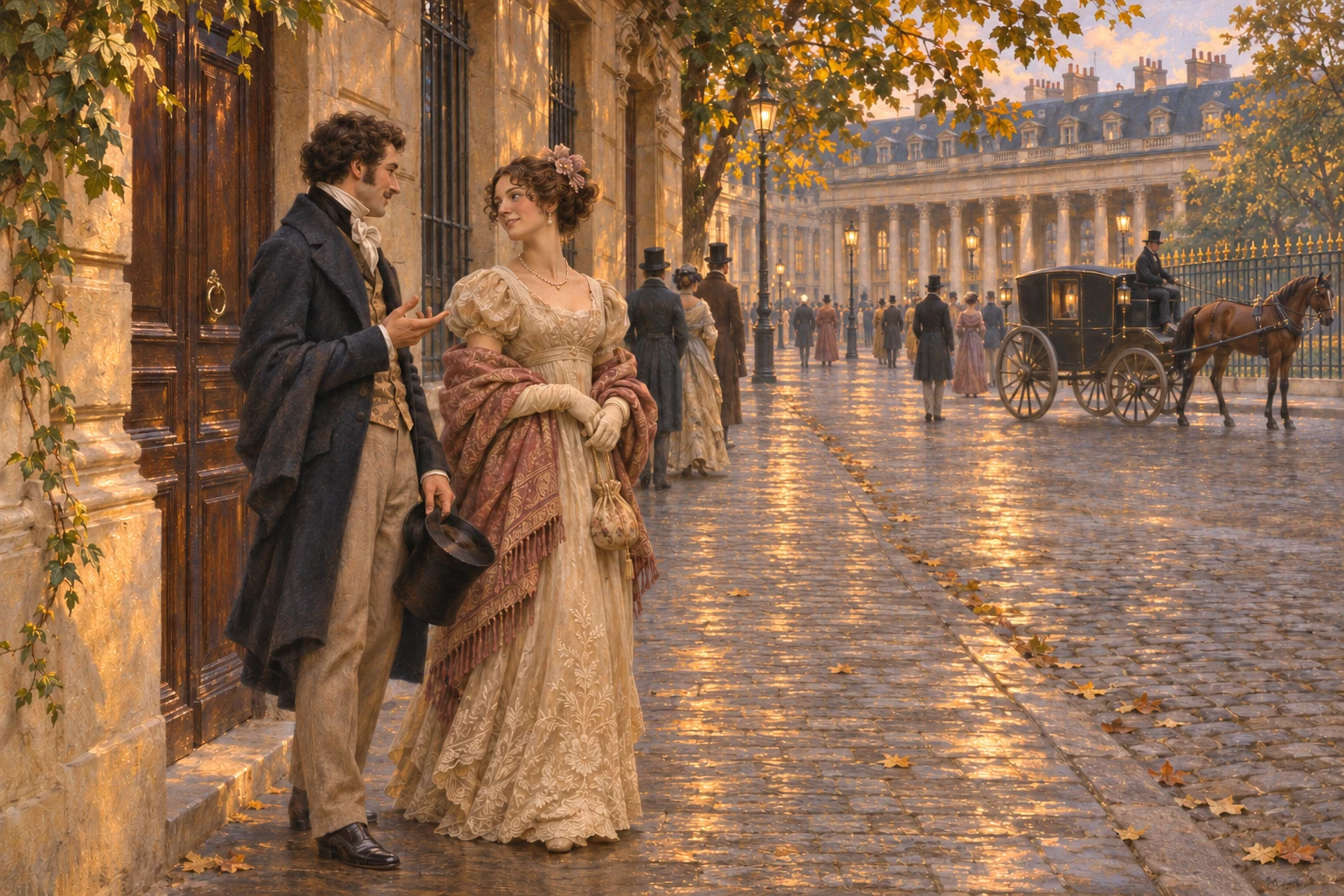
An imagined scene in 1830s Paris. A couple talk beside a cobbled street as a horse-drawn carriage passes.

History and interpretation

Chopin’s Paris

Chopin arrived in Paris in 1831. A few months later he performed at the Pleyel rooms. He dedicated the three Op. 9 nocturnes to the pianist Marie Pleyel.

A lesson with Chopin
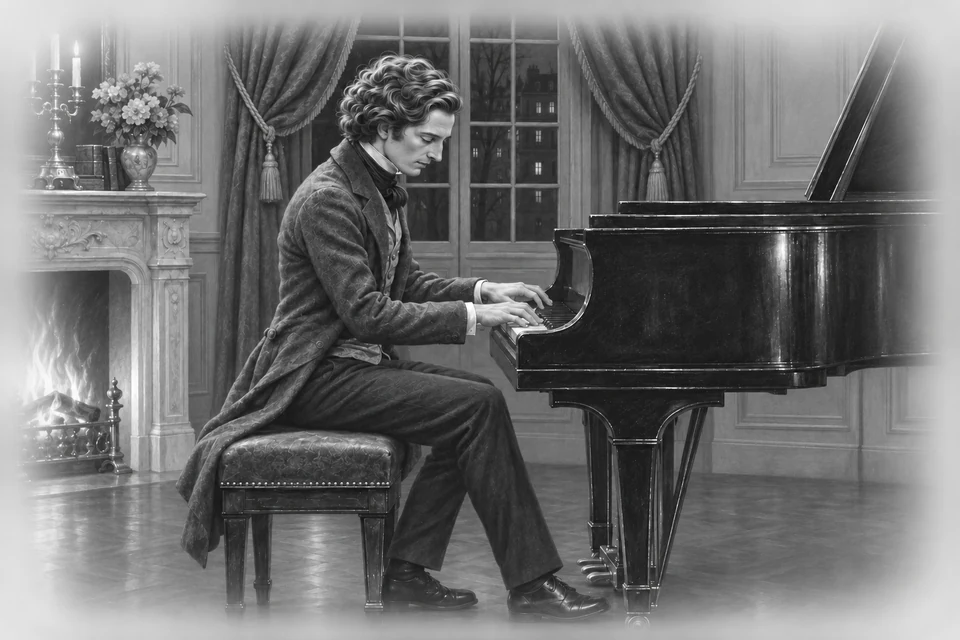
Karol Mikuli recalled that a lesson might be spent on just a few measures. Chopin would sit down at the piano to show how he wanted a phrase to sound.
The art of the nocturne
John Field cultivated the nocturne as a lyrical piano piece, setting a melody over broken chords. In Op. 9 No. 2, Chopin gives the same theme a different inflection each time it appears. The solo cadenza stretches that freedom into the silence before the final measures.
The study wheel

The nocturne as a whole

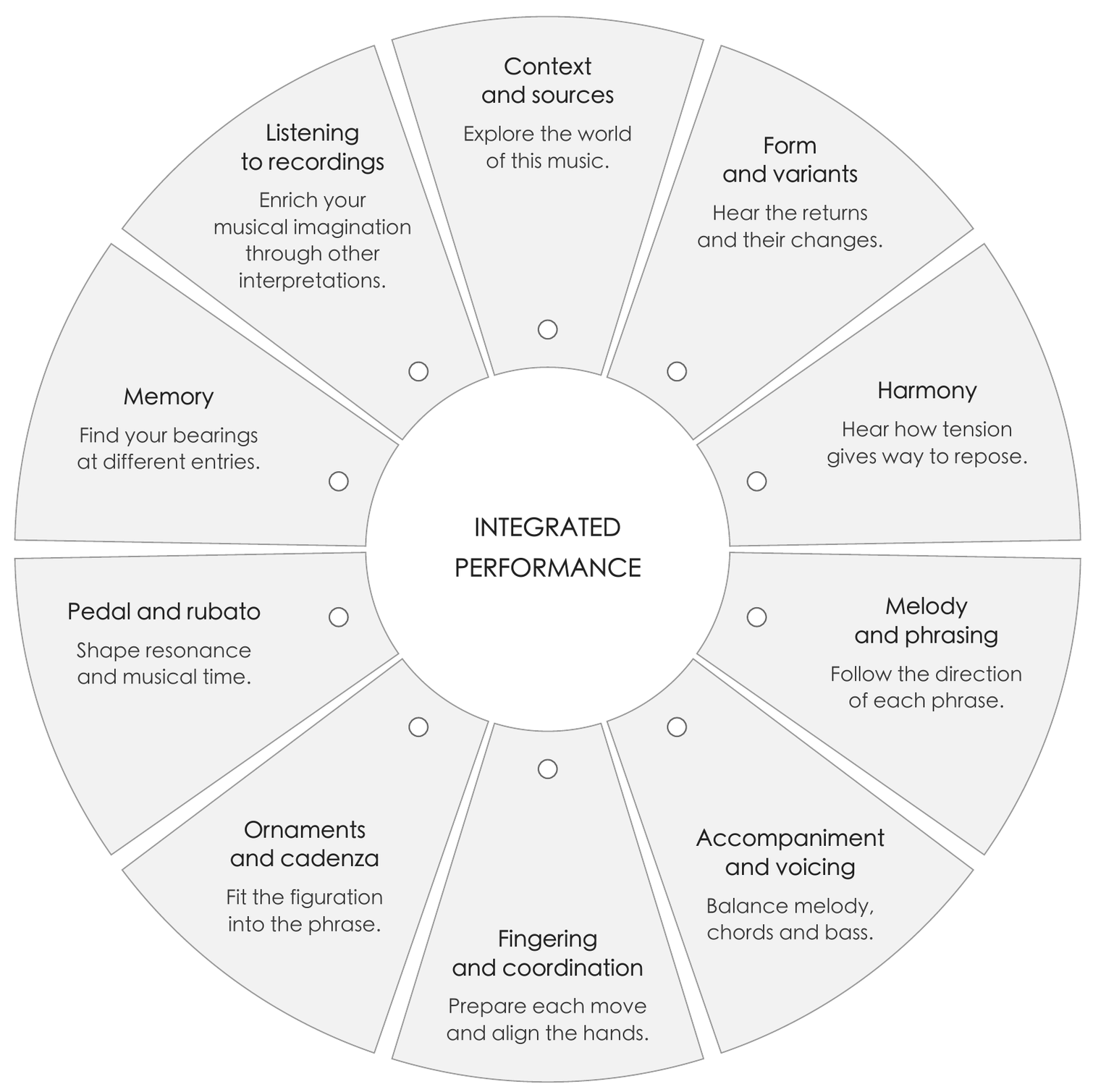
Ten aspects of a single performance. Select a segment to explore that part of the piece.

Context Form Harmony Phrasing Voicing Fingering Ornaments Pedal Memory Listening Integrated performance

Context and sources

Early editions and students’ recollections bring us closer to Chopin’s Paris. A marking from a lesson can suggest a different articulation for a familiar phrase.

Form and variants

The formal analysis traces the four appearances of the theme, the contrasting phrases, and the coda. In a separate exercise, compare four historical variants with the main edition and listen for how each change in ornamentation shapes the phrase.

Harmony

A changing chord can intensify a phrase even while a melody note is held. Follow the tension to its resolution and listen for the note the phrase is moving toward.

Melody and phrasing

Play the essential melody to hear which notes carry the phrase. When you add the ornaments again, let that underlying line guide the legato and the shape of each breath.

Accompaniment and voicing

The bass traces the harmonic motion, while the upper notes of the chords form a line of their own. Playing that line separately helps you keep it connected within the accompaniment.

Fingering and coordination

Changing fingers on a held key prepares the hand for the next note. In the quadruplet and octuplet, knowing where the left hand enters helps you coordinate both hands without accenting each meeting point.

Ornaments and cadenza

A turn takes its shape from the note it leads into. In the cadenza studies, the repeated figure gradually grows longer until you can connect it to the final descent.

Pedal and rubato

When the harmony changes, listen for how much resonance to keep. In rubato, distinguish a melody that lingers over a steady accompaniment from a change of tempo shared by both hands.

Memory

Start at different appearances of the theme, using its opening melody note and bass as landmarks. From each starting point, see if you can hear how the phrase continues.

Listening to recordings

Eight performances offer eight readings of the same measures. Listen to how long each pianist gives an ornament and how the pulse settles on the note that follows.

View the printed wheel
Full table of contents

The work and its context

  • Preface
  • At the Piano with Chopin
  • Score
  • Formal Analysis
  • Harmonic and Functional Analysis
  • A Lesson with Chopin

Practice materials

  • Phrase Comparison
  • The Resonance of the Piano
  • Essential Melody
  • The Flexibility of Time
  • Melody and Bass
  • Shared Accompaniment
  • The Art of the Nocturne
  • Left-Hand Study
  • Voicing
  • Melody and Chords
  • Tuplets
  • Listening to the Nocturne
  • Reading Ornaments
  • Historical Variants
  • Cadenza and Close
  • Musical Memory

Overview and references

  • The Nocturne as a Whole
  • Sources and References
  • Editorial Notes and Credits
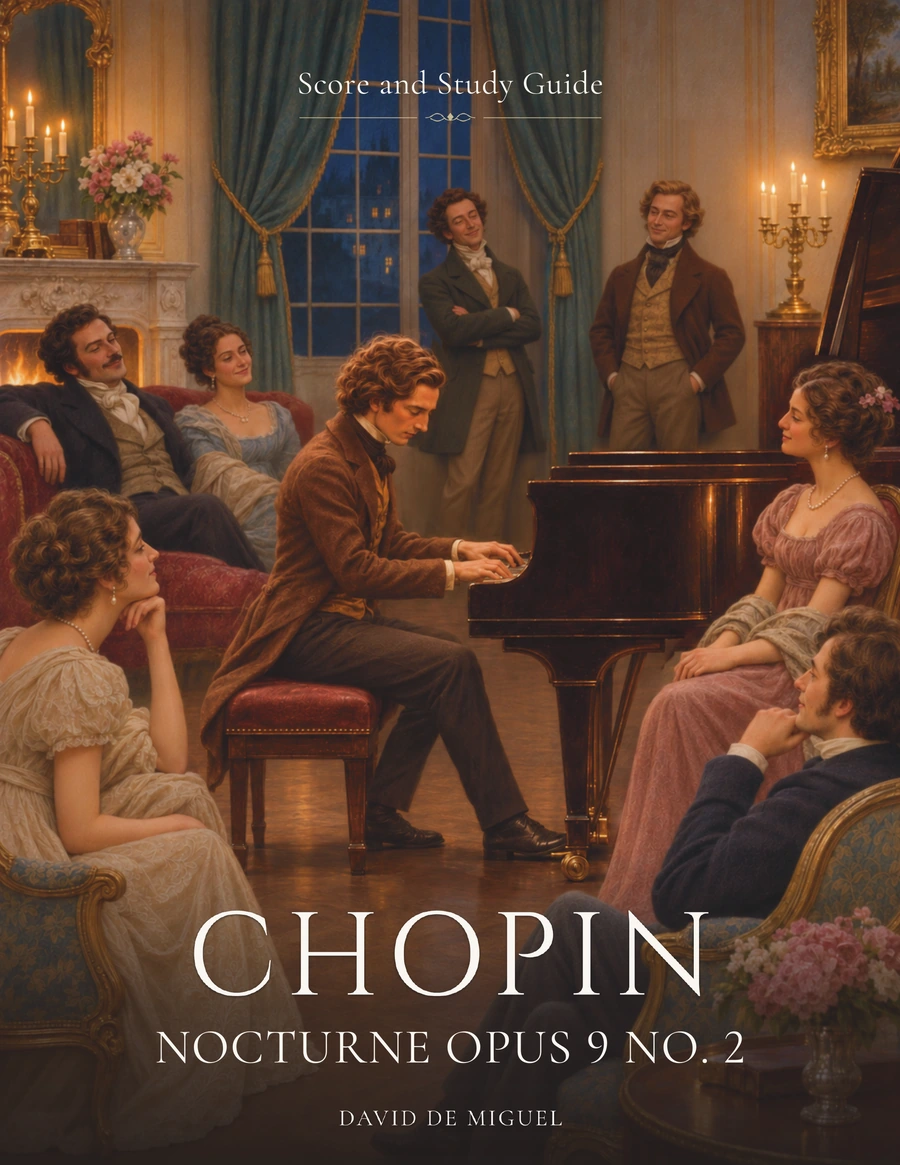
Cover of the English paperback edition of Chopin’s Nocturne Op. 9 No. 2.

Paperback edition

The score at the heart of the study

The score is laid out for the music stand, with clear slurs, dynamics, and pedal markings. David’s fingering helps you connect the notes and sustain the melodic line. The studies use the score’s measure numbers, so you can take each idea straight back to the original passage.

Questions about the guide

Who is the guide for?

Pianists who are ready to play Chopin’s original score and want to develop their interpretation. Piano teachers can also choose a study on phrasing, coordination, or the cadenza, then return to the same passage in the score with a student.

Which score is included?

The complete original work in E-flat major. David de Miguel checked the musical text against historical sources and prepared the edition and its fingering. In the annotated score, documented fingerings by Chopin appear in bold parentheses.

Zoom in and scroll to see the details.